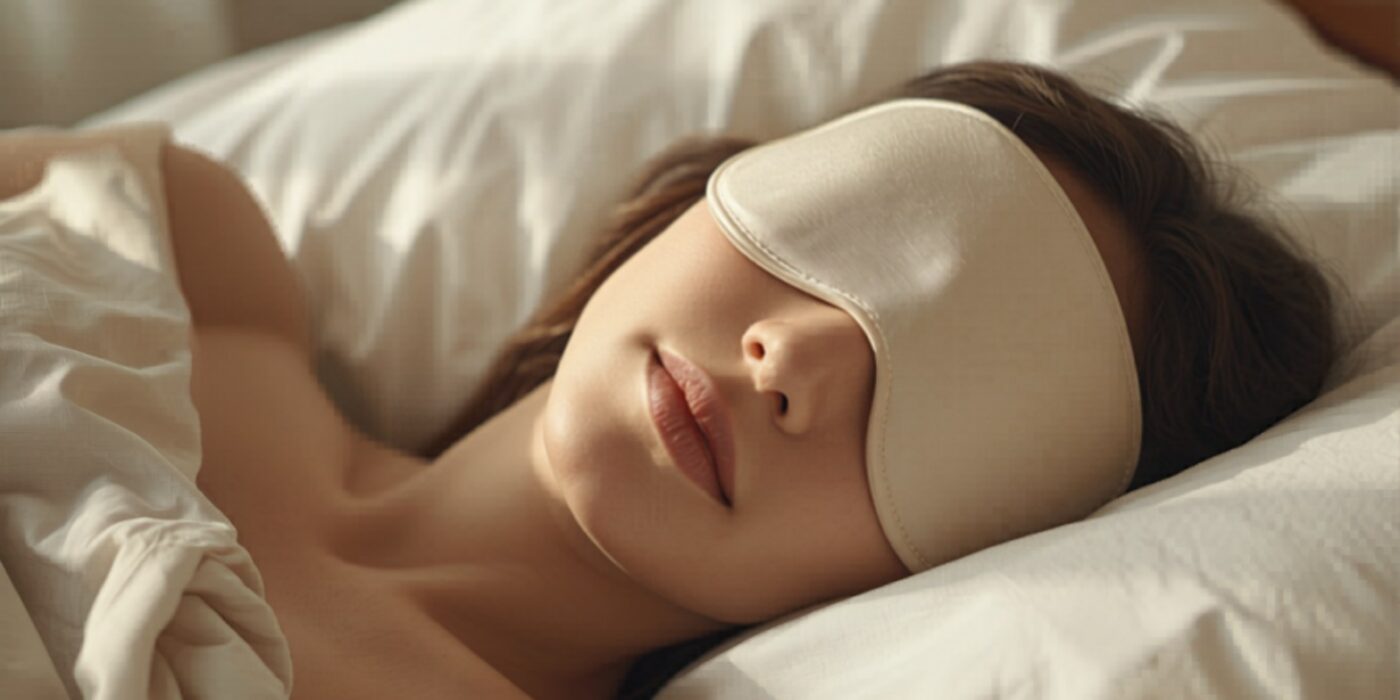
A good sleep mask is one of the simplest and most effective ways to improve your sleep. It blocks light, helps your brain produce melatonin, and creates a signal to your body that it is time to sleep. But not all sleep masks are equal, and if you pick the wrong one you can end up with a sweaty face, pressure on your eyes, or a mask that slides off before midnight.
A sleep mask works best alongside the right sleep setup, so it is worth choosing cooling, breathable bedding for night sweats too.
This guide covers what actually matters when choosing a sleep mask, from materials and design to cooling properties and comfort, so you can find one that genuinely helps rather than just sitting in a drawer.
Why Use a Sleep Mask?
Light is the single biggest environmental factor affecting your sleep quality. Research has found that even dim light exposure during sleep (as low as 5 lux, roughly equivalent to a nightlight) can suppress melatonin production by up to 50% and reduce time spent in deep sleep. Even small amounts of light in your bedroom, whether from streetlamps, standby LEDs, early morning sun, or a partner's phone, can suppress melatonin production and reduce the quality of your sleep without you even being aware of it.
Studies have shown that sleeping in complete darkness improves sleep efficiency, increases time spent in deep sleep, and leads to more restorative rest. A sleep mask is the easiest way to achieve this without fitting blackout blinds or taping over every light source in the room.
Sleep masks are also invaluable for shift workers who need to sleep during the day, travellers dealing with different time zones, anyone who shares a bedroom with someone who reads or uses screens at a different schedule, and parents who need to nap when opportunity allows regardless of the time of day.
Sleep Mask Material Comparison
| Material | Breathability | Temperature | Moisture Wicking | Skin Friendly | Price Range |
|---|---|---|---|---|---|
| Mulberry silk | Excellent | Cooling | Excellent | Excellent (hypoallergenic) | Mid to high |
| Cotton | Good | Neutral | Moderate (absorbs but holds) | Good | Low to mid |
| Polyester satin | Poor | Warm (traps heat) | Poor | Moderate | Low |
| Polyester/synthetic | Poor | Warm (traps heat) | Poor | Can irritate | Low |
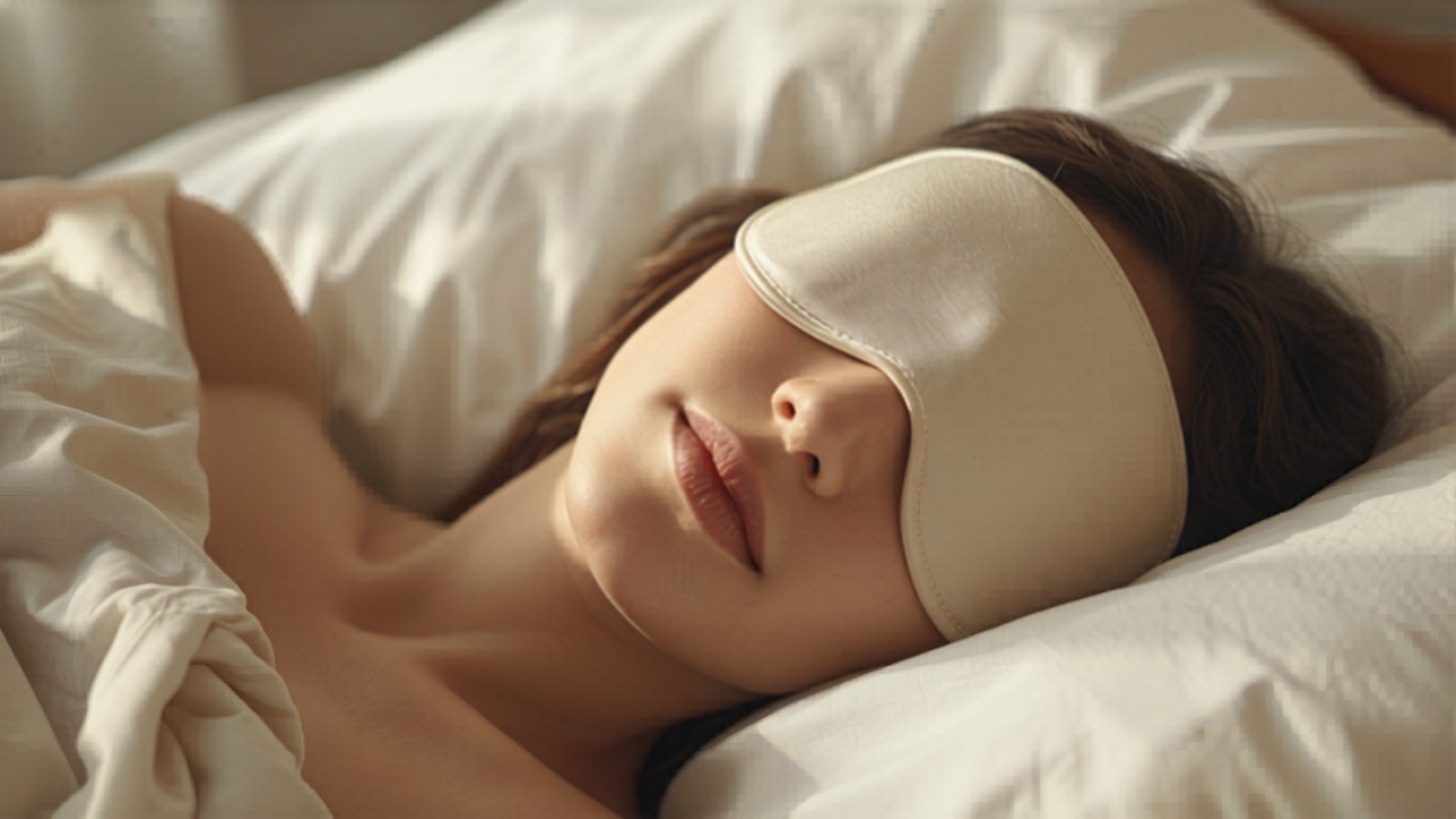
Silk vs Cotton vs Satin: Which Material Is Best?
The material your sleep mask is made from affects how it feels, how it breathes, and how it interacts with your skin. Here is how the three most common options compare.

Silk is the premium choice for a reason. Natural silk (specifically mulberry silk) is temperature regulating, breathable, and moisture wicking. It feels cool against your skin, does not trap heat, and is extremely gentle on the delicate skin around your eyes. Silk also causes less friction than other fabrics, which means less tugging on the skin and fewer sleep lines. If you tend to sweat at night or if your face gets hot under a standard mask, silk is the material you want.
Cotton is a decent budget alternative. It breathes reasonably well and absorbs moisture, though it does not wick moisture away from your skin as effectively as silk. Cotton masks tend to be thicker, which can make them warmer and less comfortable in hot weather. They are fine for people who do not overheat but not the best choice for hot sleepers.
Satin looks and feels similar to silk at first touch, but most satin sleep masks are made from polyester, not silk. This matters because polyester satin does not breathe, does not wick moisture, and traps heat against your face. If you are choosing between a satin mask and a silk mask, always check whether the satin is polyester based. If it is, it will have all the problems of any synthetic fabric when it comes to overheating.
As a general rule, if the mask does not specifically say "silk" or "mulberry silk" and instead says "satin" or "silky", it is almost certainly polyester.
Best Sleep Masks for Hot Sleepers and Night Sweats
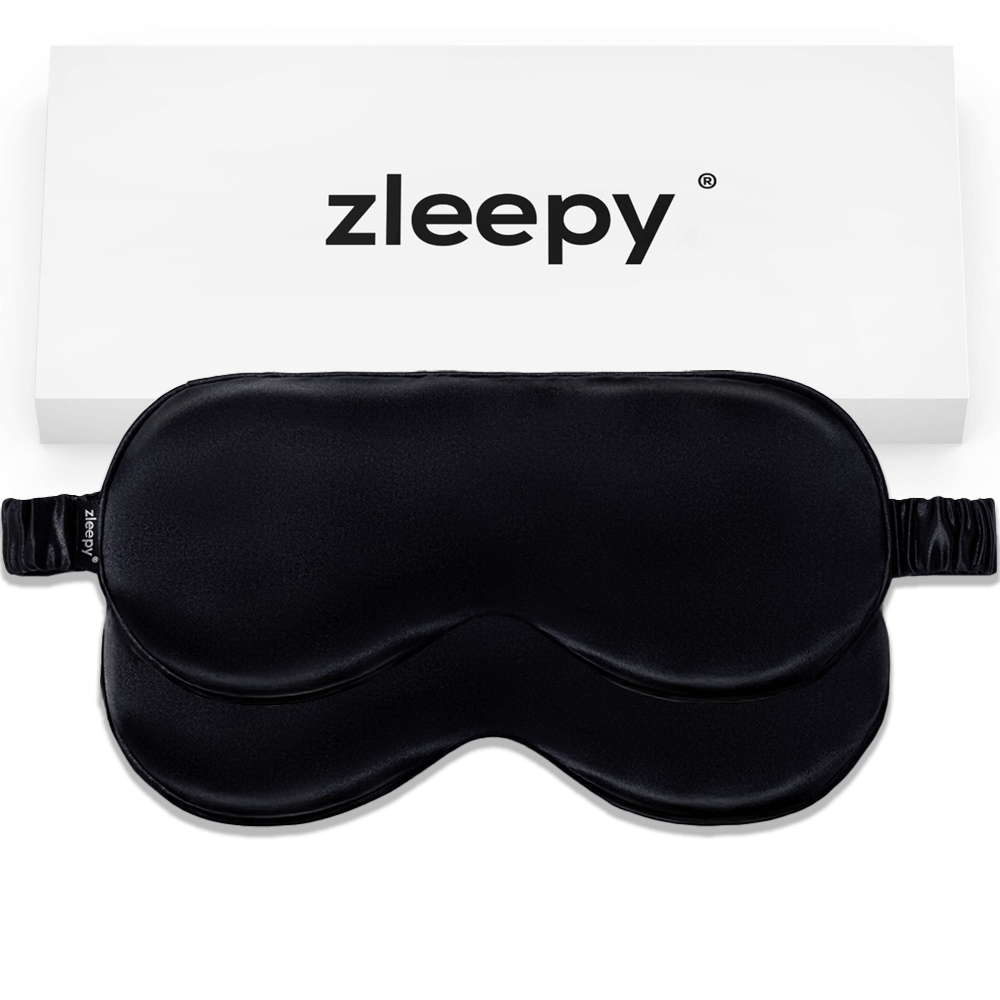
If you sweat at night, a sleep mask made from the wrong material can make things noticeably worse. The area around your eyes and forehead has a lot of sweat glands, and covering it with a non breathable fabric creates a pocket of trapped heat and moisture that can be uncomfortable enough to wake you up.
The best sleep masks for hot sleepers are made from natural silk, which is breathable and temperature regulating. Silk allows air to pass through the fabric, which means heat can dissipate rather than building up against your skin. It also wicks away any moisture, so even if you do sweat, the mask does not become damp and clammy.
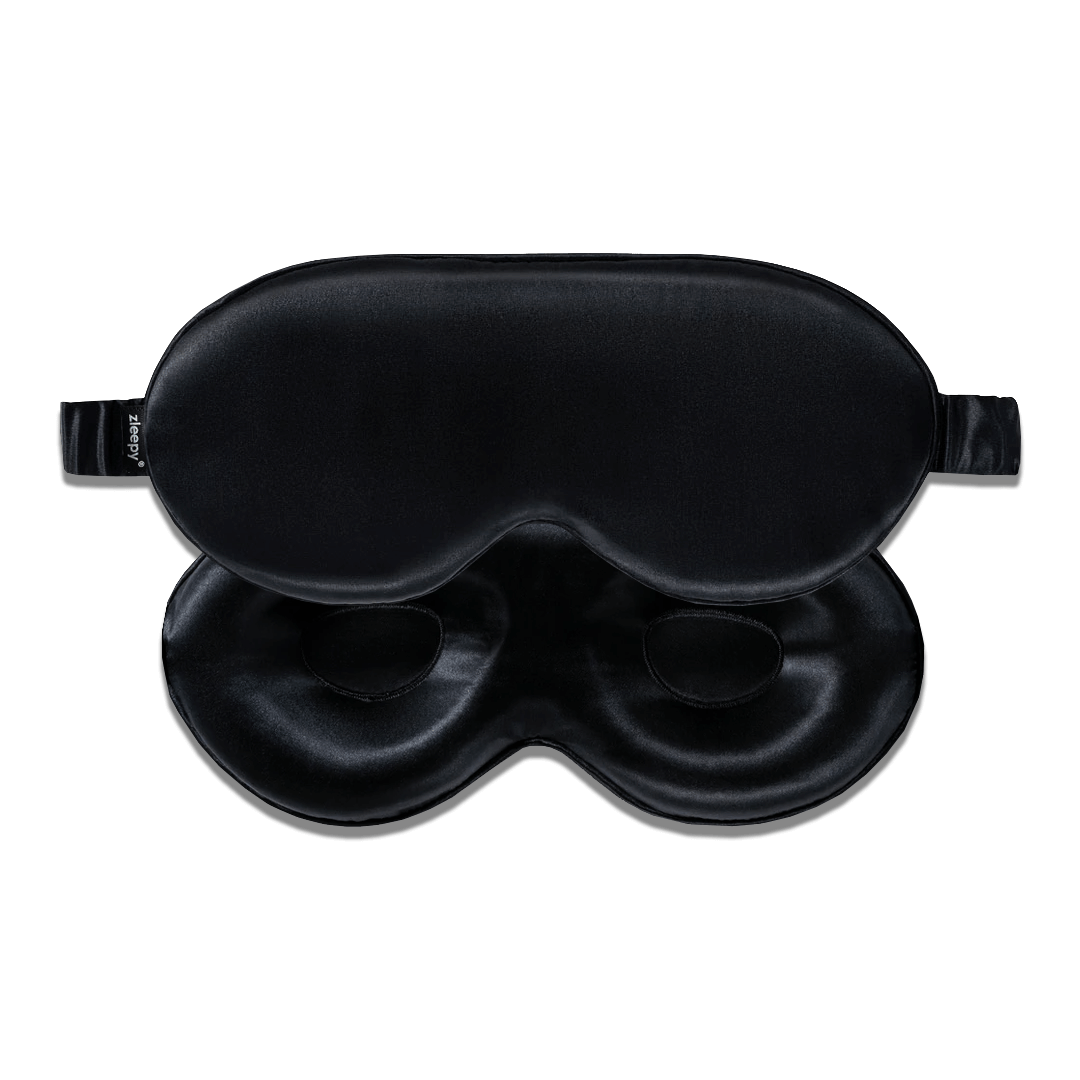
Contoured or 3D sleep masks can also help with temperature, even if they are not specifically marketed as cooling. Because contoured masks sit away from your eyes rather than pressing flat against them, there is an air gap between the mask and your skin. This air gap improves ventilation and reduces the feeling of heat and pressure.
Our silk sleep mask range includes both flat and 3D contoured designs, all made from natural silk for breathable, cool comfort.
Best Blackout Sleep Masks
If your primary goal is blocking as much light as possible, the design of the mask matters as much as the material. A flat mask that sits against your face will always let some light in around the edges, particularly around the nose. This is fine for many people, but if you need true darkness (for shift work, for example, or in a bedroom with significant light pollution), a contoured blackout design is worth the investment.

Contoured or 3D blackout masks are designed with raised cups over each eye and a shaped nose bridge that conforms to the contours of your face. The result is a much more complete seal against light, with the added benefit of keeping fabric off your eyelids and eyelashes, which some people find more comfortable.
The best blackout masks combine the contoured design with an adjustable strap and a wide enough profile to block light from above and below as well as from the sides. If you can still see light when wearing your current mask, a properly designed blackout mask is a significant upgrade.
Best Sleep Masks for Side Sleepers
If you sleep on your side, you need a mask that stays in place when your face is pressed into a pillow. Many flat masks shift or bunch up on one side when you sleep on your side, which defeats the purpose and can be irritating enough to disrupt your sleep.
For side sleepers, look for a mask with a slim, low profile design that does not have bulky padding or raised seams on the sides. An adjustable strap (ideally with a slide adjuster rather than velcro, which can catch on pillowcases and hair) helps keep the mask in position. Some contoured masks work well for side sleeping because the cup design holds its shape even under the pressure of a pillow.
Sleep Masks with Headphones
Sleep masks with built in Bluetooth headphones are a relatively new category that combines light blocking with audio. They are popular with people who fall asleep listening to podcasts, audiobooks, white noise, or sleep meditation apps.
The concept is practical, but the execution varies widely. The best ones use flat speakers that sit inside the mask without creating uncomfortable pressure points. The worst ones have hard, lumpy speaker units that make the mask unwearable for side sleepers.
If you are interested in this type of mask, pay attention to speaker placement and thickness. The speakers should be thin enough that you cannot feel them when lying on your side. Battery life is also important. Look for at least 8 hours of playback so the mask lasts through the whole night. And check whether the speakers are removable for washing, because a sleep mask that cannot be washed will become unhygienic very quickly.
There are some small concerns with bluetooth long term. Find out why you shouldn't wear a bluetooth sleep mask.
How to Care for Your Sleep Mask
Your sleep mask sits against your face for hours every night, which means it accumulates the same things your pillowcase does: sweat, skin oils, dead skin cells, and the bacteria that feed on all of them. If you do not wash your sleep mask regularly, it becomes a breeding ground for bacteria, which can lead to skin breakouts, irritation, and eye infections.
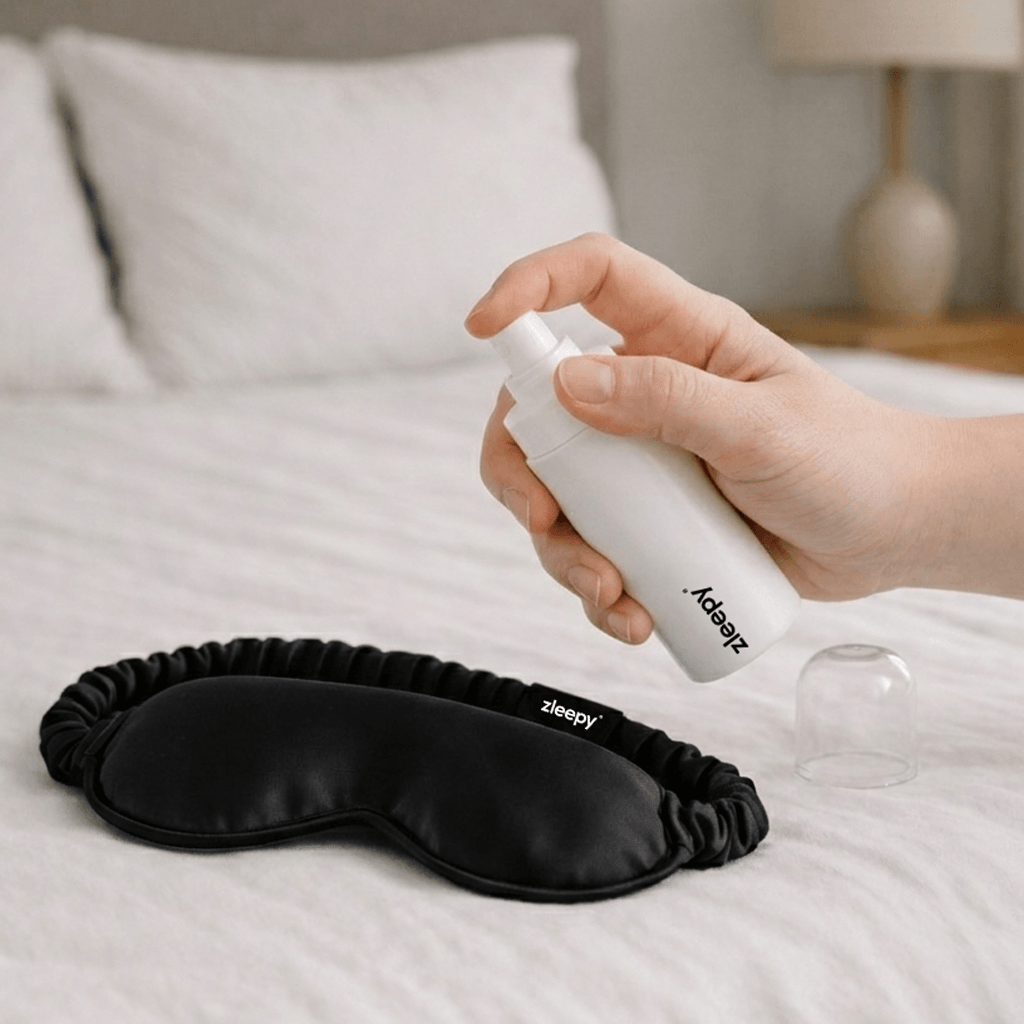
Wash your sleep mask at least once a week. Silk masks should be hand washed in cool water with a gentle detergent, then air dried. Cotton and synthetic masks can usually go in the washing machine on a gentle cycle, but check the care label.
Between washes, you can use a sleep mask cleaning spray to keep the bacteria in check without having to wash the mask every day. This is especially useful if you are travelling and do not have easy access to washing facilities.
Just like your pillowcase, the cleaner your sleep mask is, the better it is for your skin and your overall sleep hygiene. For more on the importance of keeping your sleep environment clean, see our guide on how often you should wash your sheets.