It is one of those questions that everyone wonders about but few people ask out loud. How often should you actually be washing your bed sheets? Once a week? Every two weeks? Monthly? And does it really matter that much?
The short answer is yes, it matters more than most people think. Your bed sheets accumulate sweat, dead skin cells, body oils, saliva, and bacteria at a rate that would make most people change their sheets immediately if they could see it. And if you are someone who sweats at night, the buildup happens even faster.
Here is what the evidence says, what happens when you leave it too long, and what you can do to keep your sheets feeling fresh even in the days between washes.
How Often Should You Really Wash Your Sheets?
Most dermatologists and sleep hygiene experts recommend washing your bed sheets once a week. This is the minimum frequency needed to keep bacterial levels, allergens, and buildup of dead skin and body oils at a manageable level.
Once a week works for most people under normal conditions, meaning you shower before bed, sleep in pyjamas, do not sweat excessively, and do not share your bed with pets. If any of those conditions do not apply to you, you may need to wash more frequently.
In reality, surveys consistently show that most people in the UK wash their sheets somewhere between every one and two weeks, with a significant number stretching it to three or four weeks. If you fall into the less frequent camp, you are not alone, but you should know what is happening in your sheets during that time.
What Happens If You Do Not Wash Your Sheets Often Enough?
Every night you spend in bed, your body sheds roughly 500 million dead skin cells and produces around 200ml of sweat (and up to a litre or more if you experience night sweats), even if you do not feel like you are sweating. Add to that body oils, saliva, any residual makeup or skincare products, and whatever your hair transfers onto the pillow.
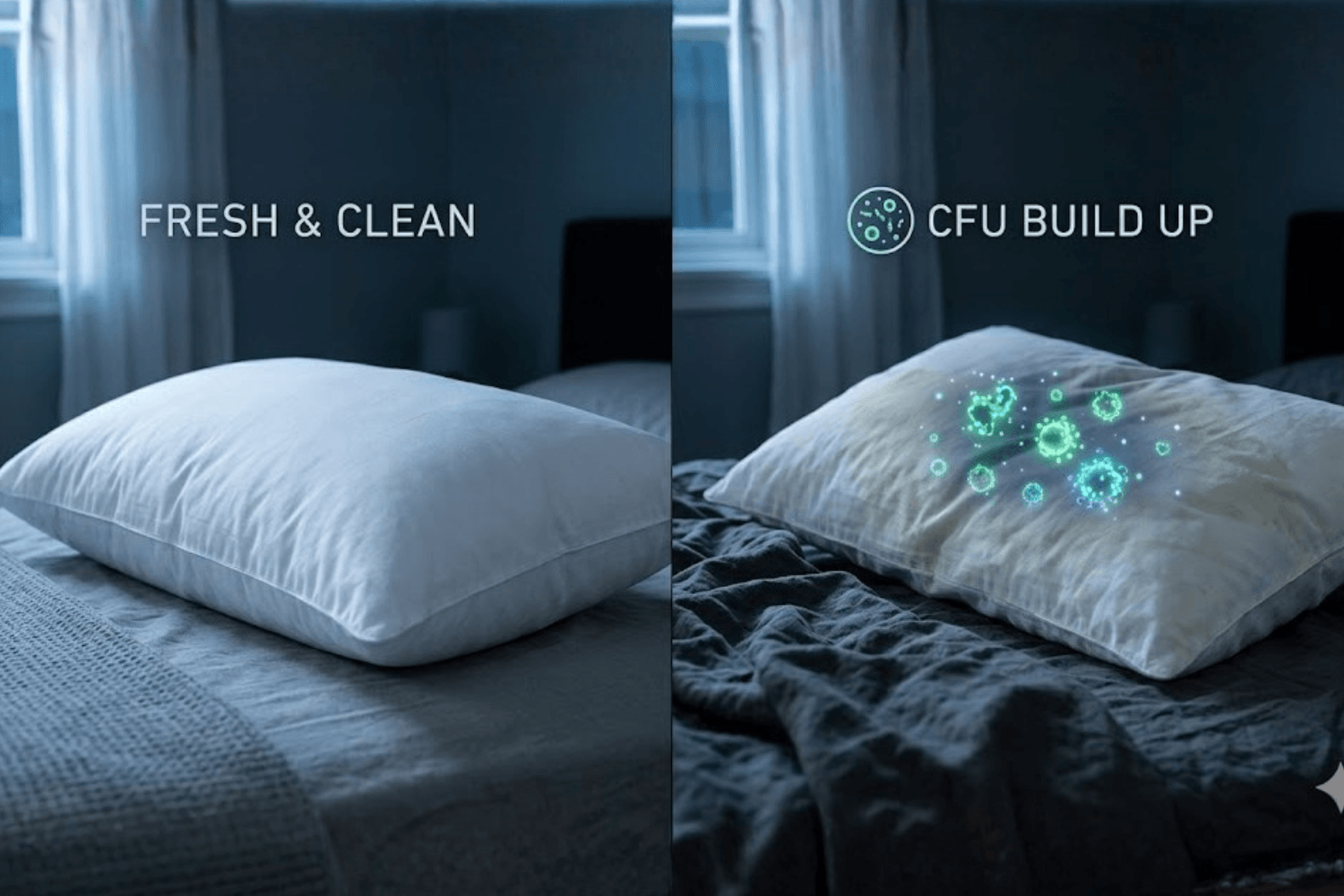
All of this organic material is food for bacteria and dust mites. Within a few days of putting on fresh sheets, bacterial colonies begin to establish themselves in your bedding. By the end of a week, the bacterial count on your pillowcase alone can be thousands of times higher than what you would find on a toilet seat. By two weeks, those numbers are significantly higher still.
How Bacteria Builds Up on Your Sheets Over Time
| Time Since Last Wash | Bacteria (CFU per sq inch) | Compared To |
|---|---|---|
| 1 week | 3 to 5 million | 17,000x more than a toilet seat |
| 2 weeks | ~9 million | 332x more than a tap handle |
| 3 weeks | ~11 million | 405x more than a kitchen sink |
| 4 weeks | ~12 million | 39x more than a pet food bowl |
Data from Amerisleep bedding bacteria study.
Dust mites, which feed on dead skin cells, also thrive in unwashed bedding. An average mattress can harbour between 100,000 and 10 million dust mites, and their droppings are a leading trigger for allergic rhinitis and asthma. Their droppings are a common trigger for allergies and can worsen asthma symptoms. The warm, slightly damp environment of a used bed is their ideal habitat.
Beyond the microscopic, there are the more noticeable effects. Sheets that have not been washed in a while start to feel oily and lose their crispness. They develop a musty or sour smell. They can cause or worsen skin breakouts, particularly on your face, back, and chest. And they simply become less pleasant to sleep in, which can subtly affect your sleep quality even if you do not consciously notice it.
Should You Wash Sheets More Often If You Sweat at Night?
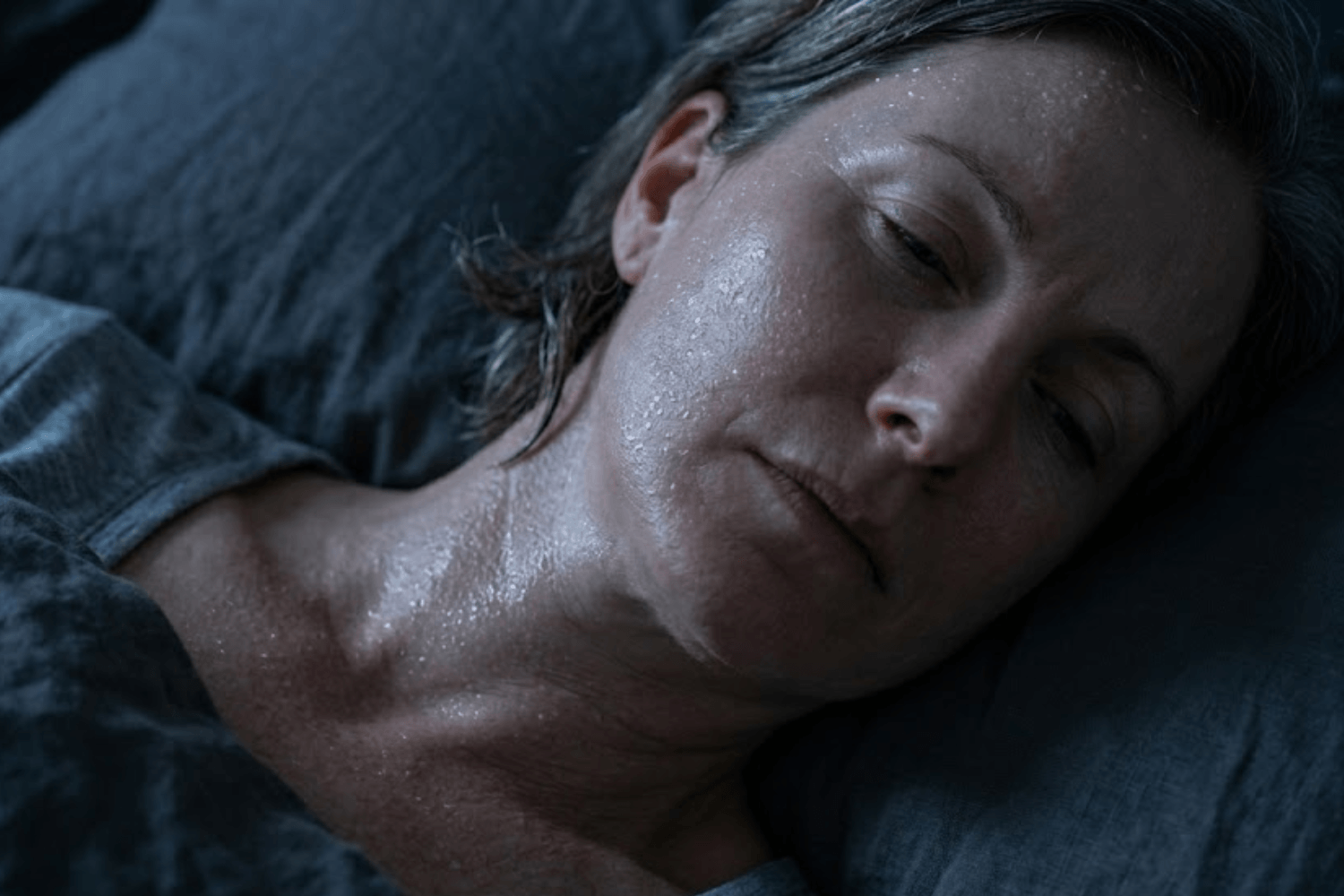
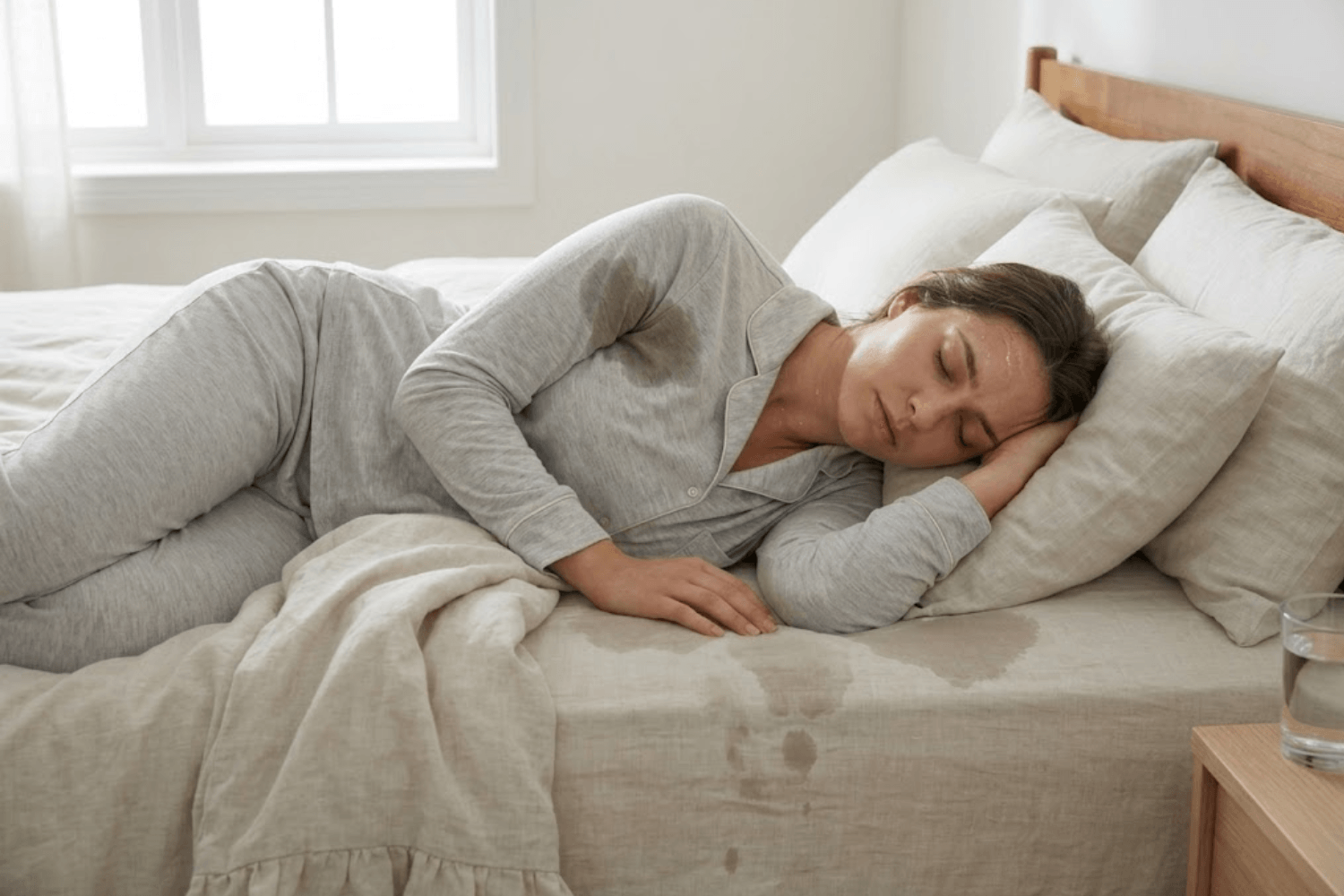
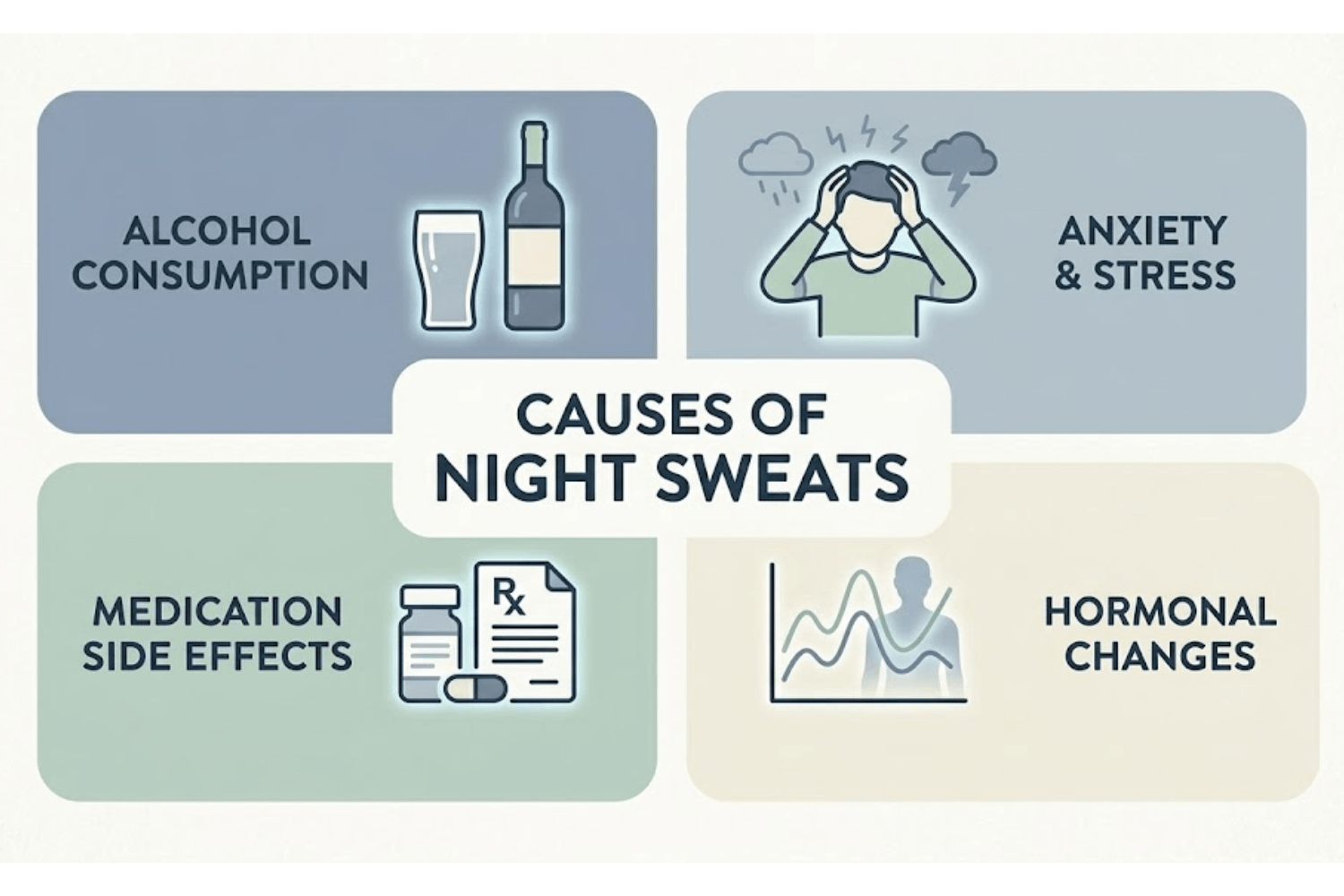
Yes, without question. If you sweat at night, whether because of night sweats, a warm bedroom, or heavy exercise before bed, your sheets are accumulating moisture much faster than normal. This moisture creates exactly the kind of warm, damp environment that bacteria love.

For people who regularly sweat at night, washing sheets twice a week is ideal. Once a week is the absolute minimum, and pushing it to two weeks is going to result in significant bacterial buildup, unpleasant odours, and bedding that feels noticeably stale.
The problem, of course, is that washing sheets twice a week is a significant amount of laundry. If you have a busy schedule, children to look after, or simply do not have the time and energy, it can feel impossible. That is where between wash maintenance comes in, which we will cover below.
Does the Type of Bedding Matter?
Enormously. The fabric your sheets are made from directly affects how quickly bacteria build up, how much moisture they retain, and how fresh they feel between washes.
Polyester and microfibre are the worst offenders. These synthetic fabrics do not breathe, so they trap moisture against your skin. They also tend to hold onto odours more stubbornly than natural fabrics, which means they start smelling stale sooner and are harder to fully freshen up in the wash.
Cotton is better. It breathes reasonably well and is easy to wash at high temperatures, which helps kill bacteria. However, cotton can take a long time to dry and does not wick moisture away from your body as effectively as some other natural fabrics.
Bamboo is one of the best options for maintaining freshness between washes. It is naturally moisture wicking, breathable, and has natural antibacterial properties that slow down bacterial growth compared to cotton or synthetic alternatives. Bamboo sheets stay fresher for longer and feel cleaner for more days after washing.
Eucalyptus (TENCEL/Lyocell) has similar benefits to bamboo. It is exceptionally smooth, moisture wicking, and breathable, and the closed loop production process makes it environmentally friendly too. Eucalyptus bedding is particularly good for people with sensitive skin because it resists bacterial buildup that can cause irritation.
If you are currently sleeping on polyester or microfibre sheets and dealing with night sweats, switching to bamboo or eucalyptus will make a noticeable difference to how fresh your bedding feels and how quickly it deteriorates between washes.
How to Keep Sheets Fresh Between Washes
Even if you wash your sheets weekly, those last few days before wash day can feel pretty grim if you are sweating at night. Here is how to extend that fresh sheet feeling.
Air your bedding every morning. When you get up, pull the duvet right back and leave it for at least 20 minutes. This lets the moisture from your night's sleep evaporate rather than sitting in your sheets all day. If you make your bed immediately, you are trapping that moisture in, creating a sealed environment that bacteria thrive in.
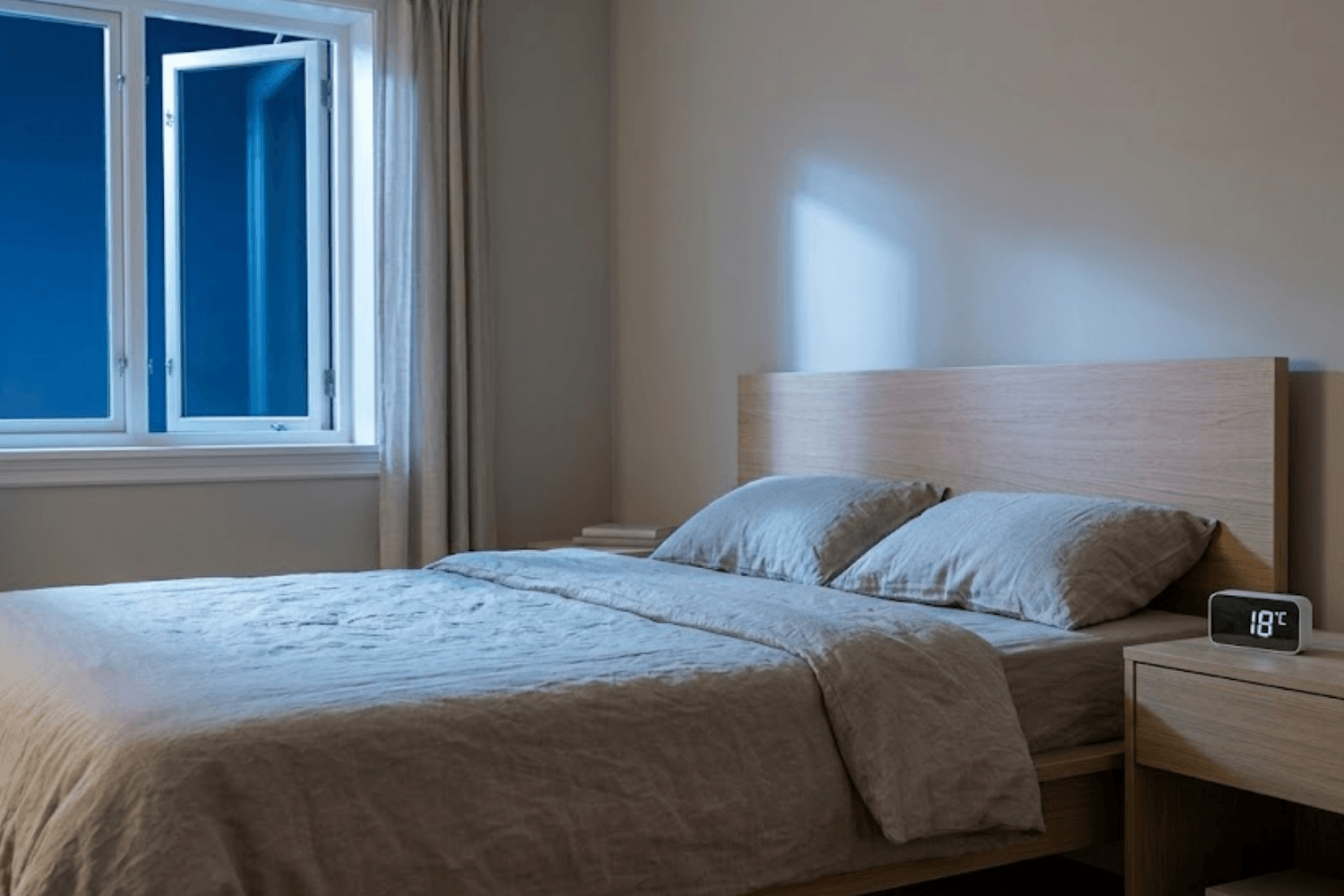
Open a window. Fresh air circulation helps dry out your bedding and moves stale air out of the room. Even 10 minutes with a window cracked makes a difference.
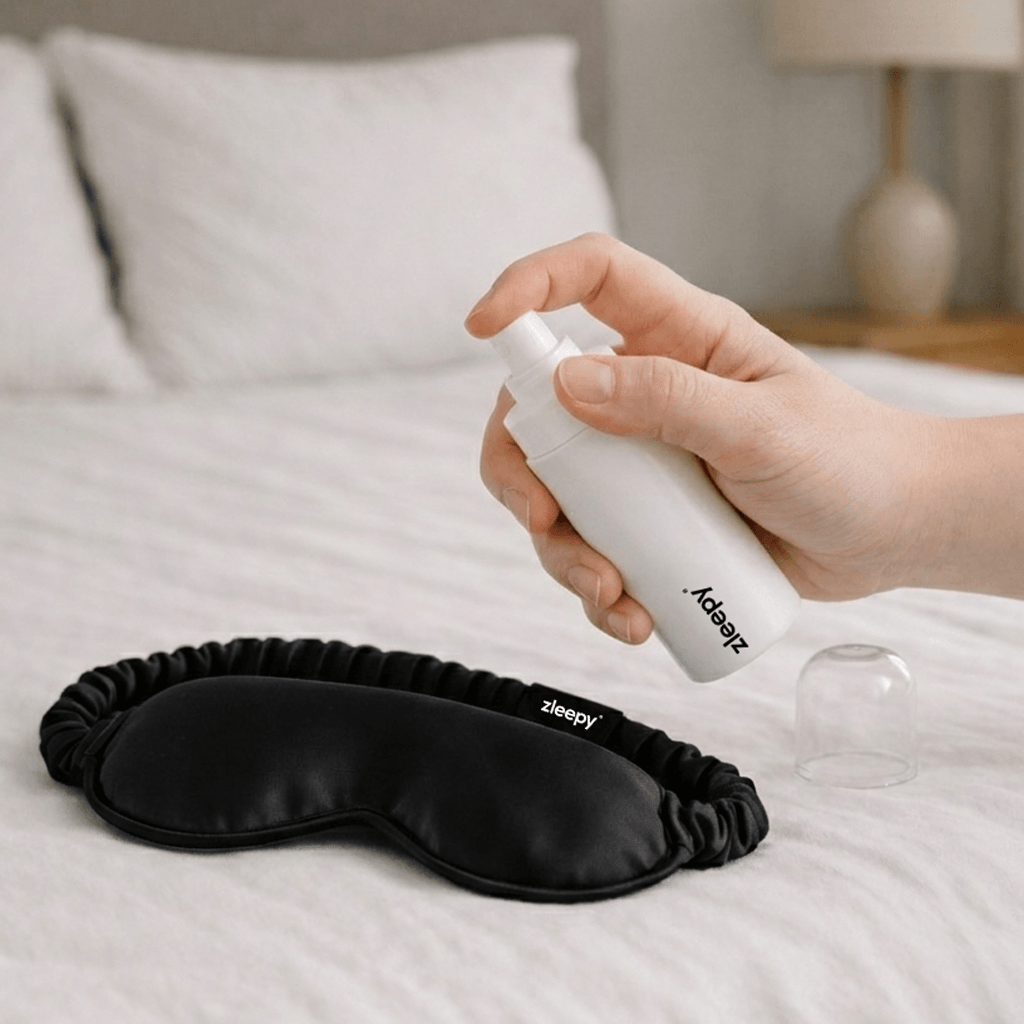
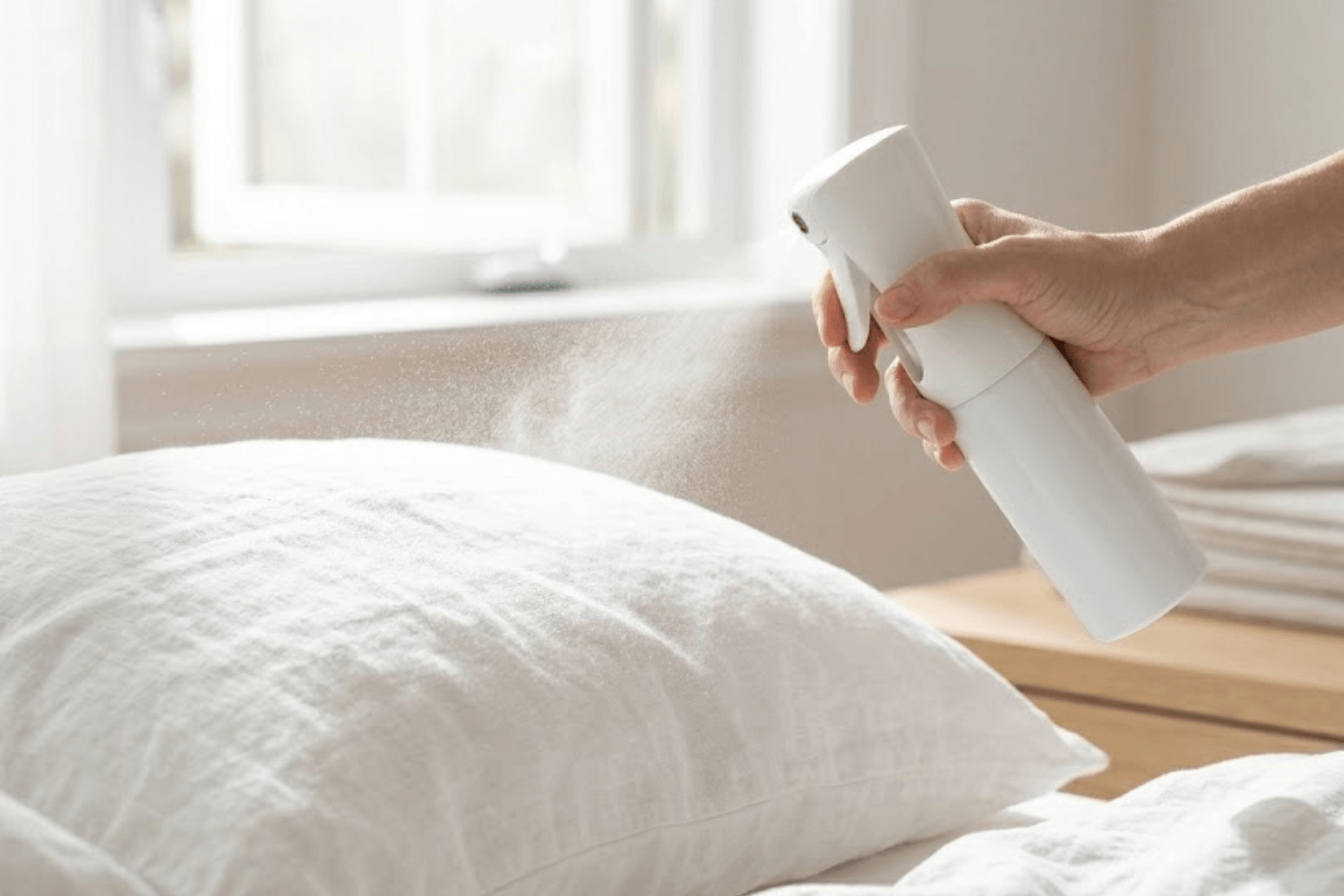
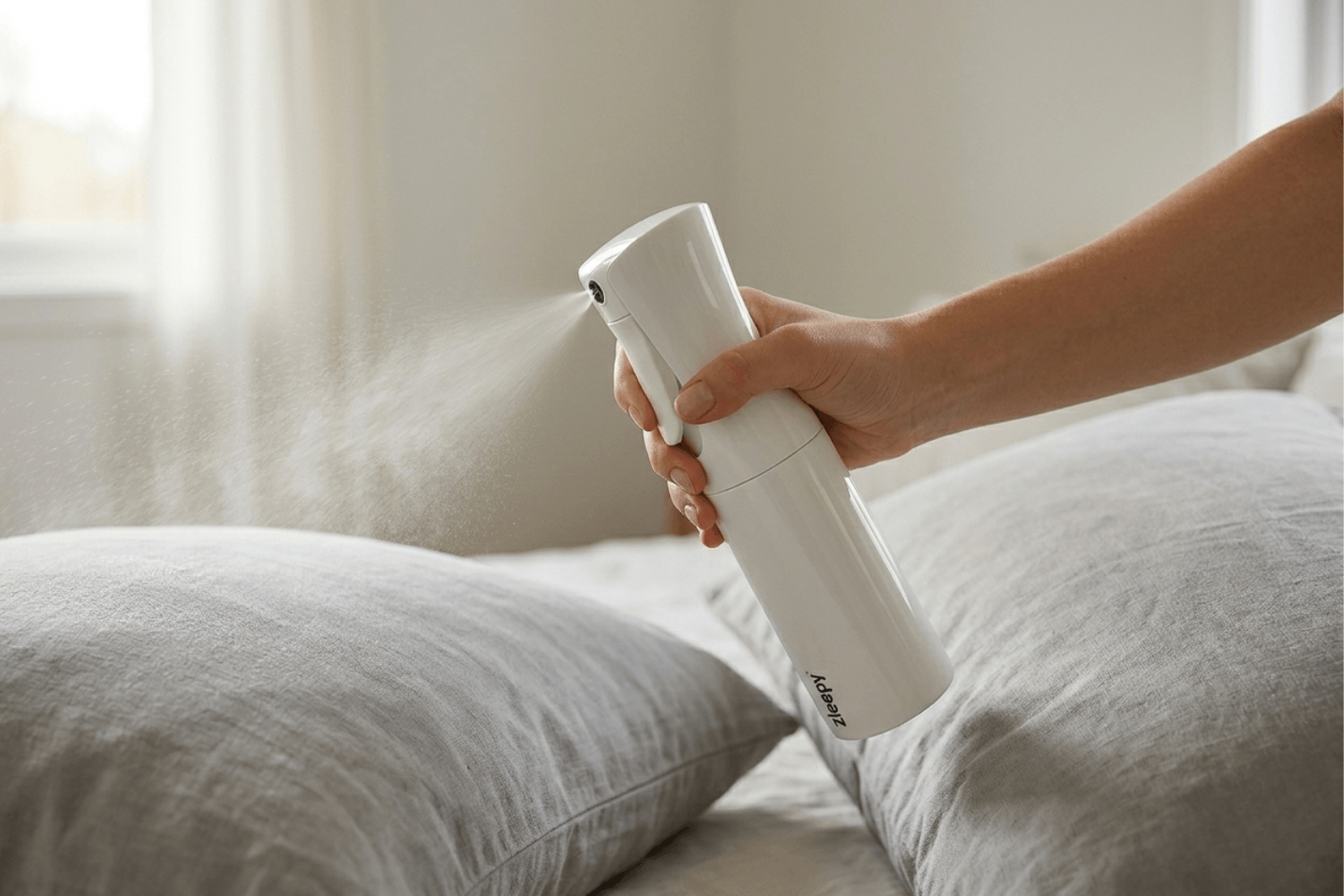
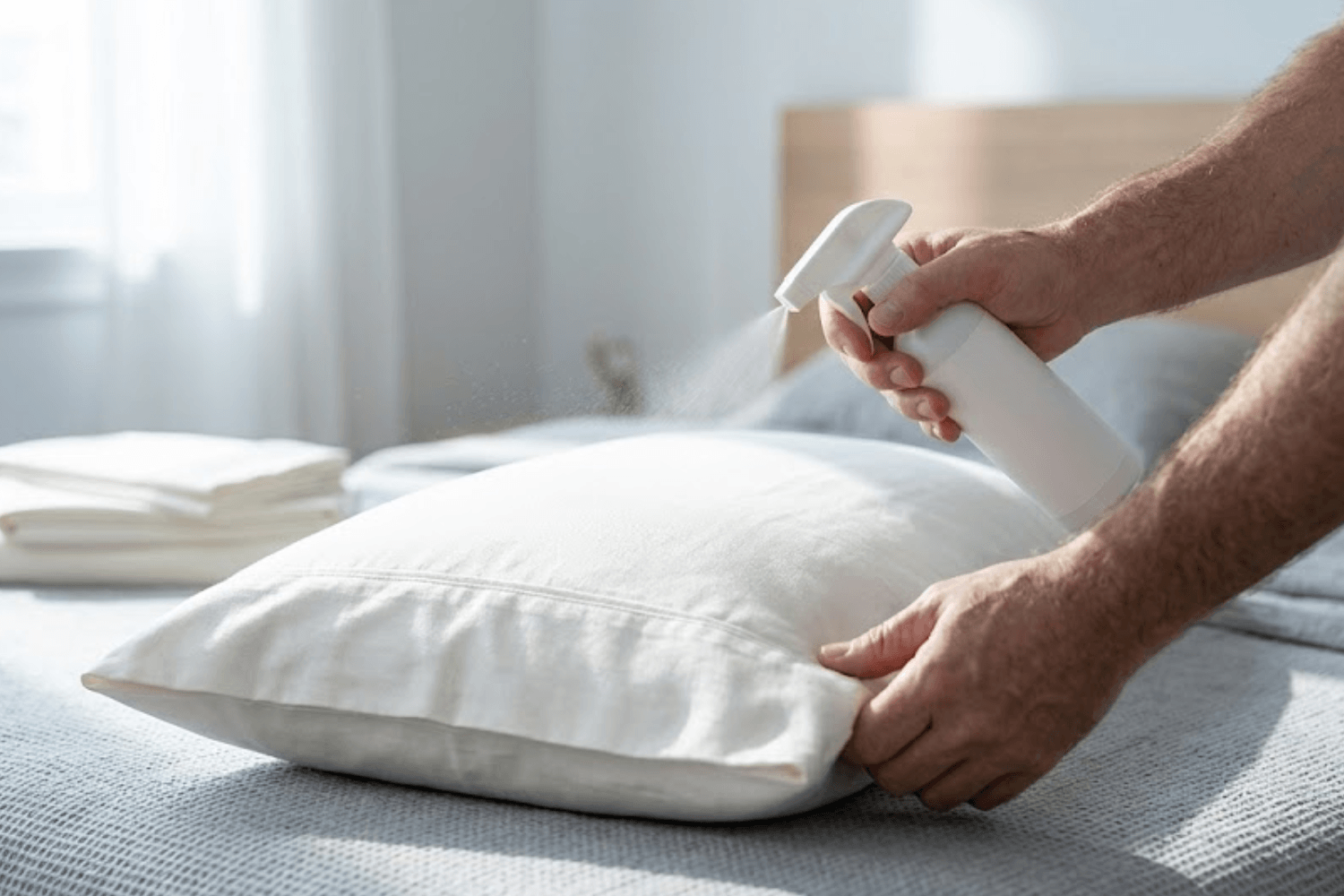
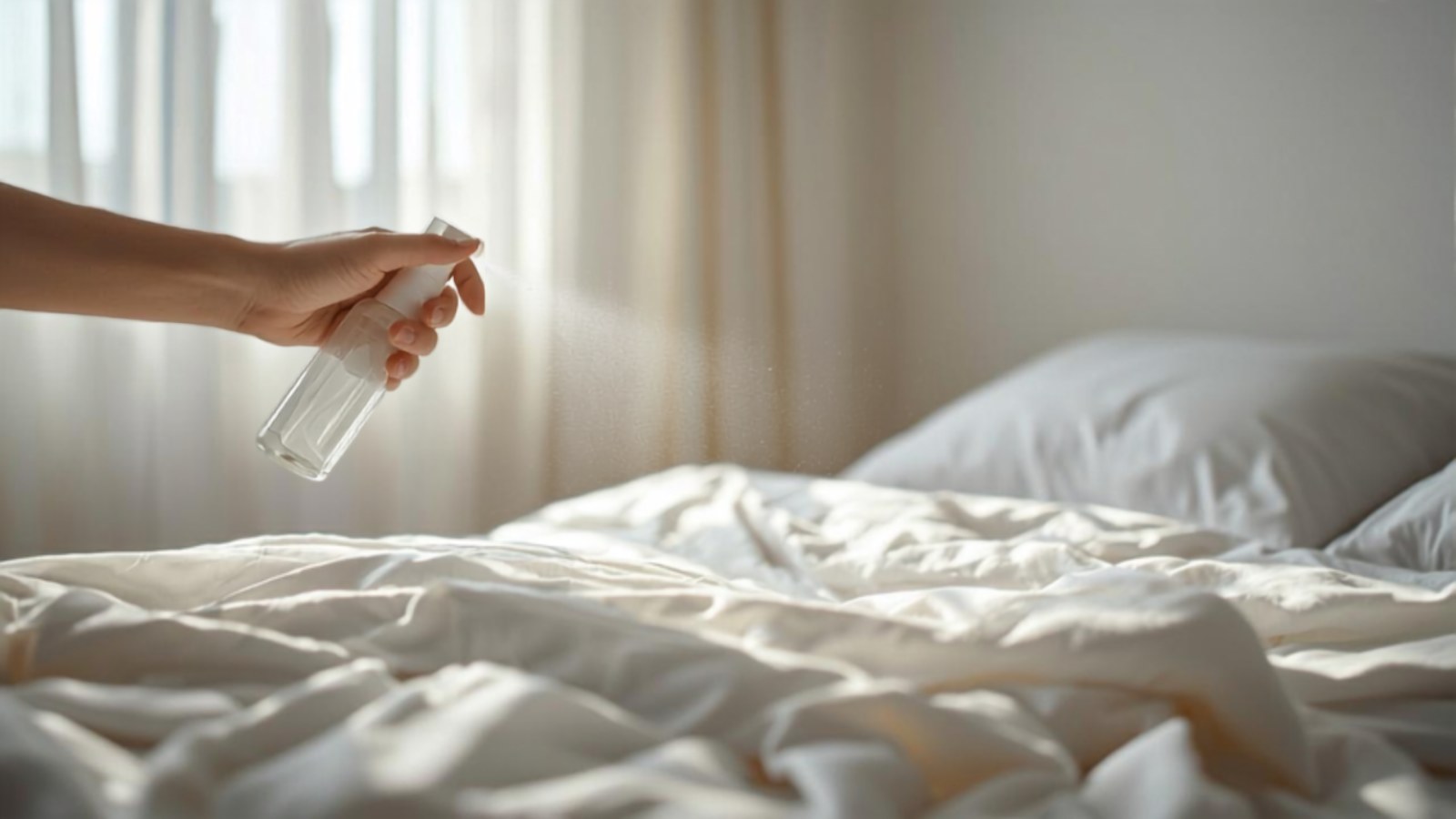
Use a bedding hygiene spray. This is the single most effective thing you can do between washes. A quick spray of a bedding hygiene spray over your sheets and pillows tackles the bacteria that cause odour and staleness. It is not a fragrance cover up. It works by addressing the bacteria themselves, keeping your bedding genuinely cleaner for longer. The whole routine (pull duvet back, spray, done) takes about 30 seconds.
Have a spare set of sheets. If you have two sets of sheets and rotate them, you can change your bed midweek without having to do a wash immediately. Strip the bed, put the fresh set on, and wash the used set when it is convenient. This effectively halves the time each set spends on your bed.
Change your pillowcase more often. Your pillowcase gets the worst of it because your face, mouth, and hair are in direct contact with it all night. Changing your pillowcase every two to three days is one of the easiest wins for keeping your bed feeling clean.
How to Get Sweat Stains and Smells Out of Sheets
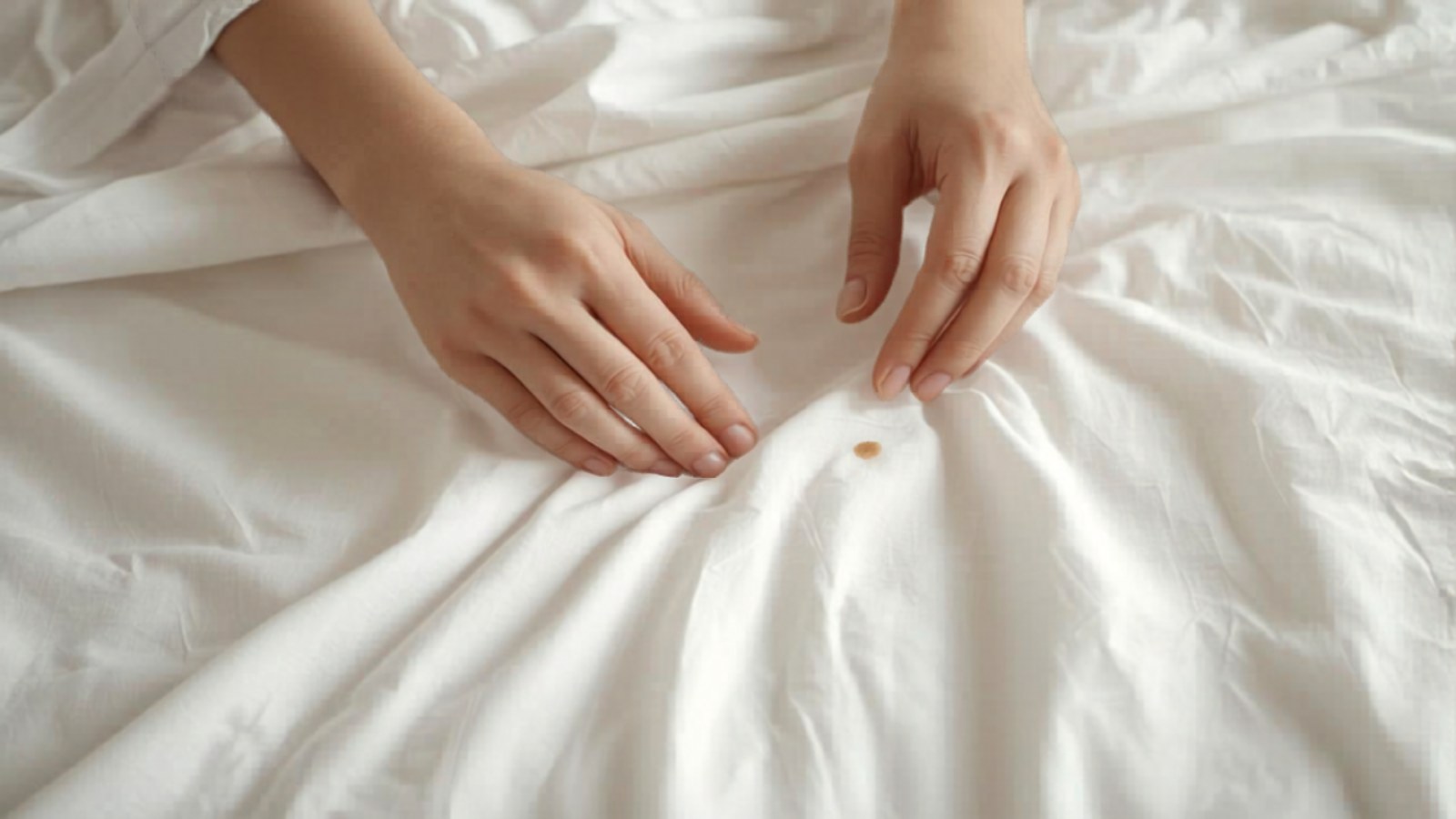
If your sheets have already developed that telltale yellow discolouration or a persistent sour smell that does not come out in a normal wash, here are some tips that actually work.
For sweat stains: soak the stained area in a paste of bicarbonate of soda and water for 30 minutes before washing. For stubborn stains, add a cup of white vinegar to the wash cycle. Hydrogen peroxide (the kind you can buy from a pharmacy) is also effective on yellowed white sheets, but test it on a small area first if your sheets are coloured.
For persistent smells: add half a cup of bicarbonate of soda to the wash along with your normal detergent. The bicarbonate neutralises odours rather than just masking them. White vinegar in the rinse cycle also helps. Avoid using fabric softener on sheets, as it coats the fibres and can actually trap odours and reduce the fabric's ability to wick moisture.
Wash at the right temperature: 60 degrees Celsius is ideal for killing bacteria and dust mites. Check your sheet's care label, but most cotton and bamboo sheets can handle 60 degrees. If your sheets can only be washed at 40 degrees, the bicarbonate of soda and vinegar tips become even more important.
Dry thoroughly. Do not put sheets away or on the bed until they are completely dry. Damp sheets are a breeding ground for bacteria and can develop a musty smell very quickly. Line drying in sunlight is the best option if you can, as UV light has natural antibacterial properties.
For more on what causes your sheets to smell in the first place and how to prevent it, see our article on why your sheets smell.
Pillowcases: The Most Important Thing to Wash
If you only take one thing from this article, let it be this: your pillowcase is the single most important piece of bedding to keep clean.
Your face is pressed against your pillowcase for eight hours every night. Everything on your face, including sweat, oil, saliva, dead skin, residual skincare products, and the bacteria that feed on all of it, transfers directly onto the fabric. If you breathe through your mouth during sleep, add moisture from your breath to the mix.
Dirty pillowcases are a leading cause of facial breakouts, particularly along the jawline and cheeks. They can also aggravate skin conditions like eczema and rosacea. And if you suffer from allergies, the dust mites that accumulate in an unwashed pillowcase can trigger sneezing, congestion, and itchy eyes.
Ideally, change your pillowcase every two to three days. If that feels like too much laundry, at the very least turn your pillow over halfway through the week so you are sleeping on a fresher surface. And consider investing in extra pillowcases so you always have clean ones ready to swap in. Bamboo and silk pillowcases are naturally more resistant to bacterial buildup, which means they stay fresher for longer than cotton or synthetic alternatives.