You have just had a baby. You are exhausted, your hormones are all over the place, and now you are waking up in the middle of the night completely soaked in sweat. As if the night feeds and the sleep deprivation were not enough, your body has decided to add drenching night sweats to the mix.
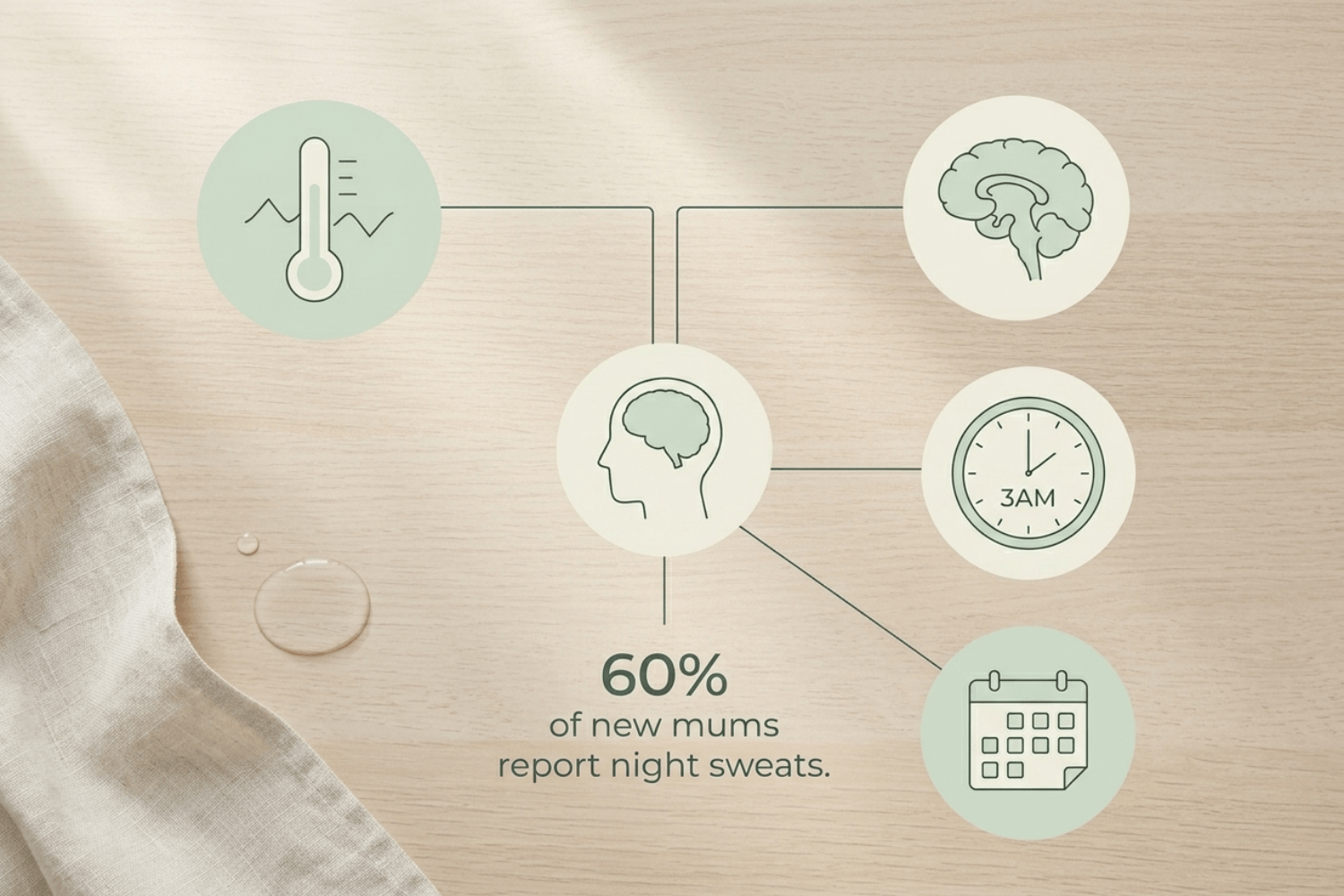
If this is happening to you, take some comfort in knowing that postpartum night sweats are extremely common, completely normal, and almost always temporary. Research suggests that up to 60% of women on obstetric wards report night sweats, making it one of the most prevalent postpartum symptoms. They are your body's way of adjusting after pregnancy, and while they are uncomfortable, they are not usually a sign of anything to worry about.
This guide explains why postpartum night sweats happen, how long they typically last, and most importantly, what you can do to manage them when you are already running on very little sleep.
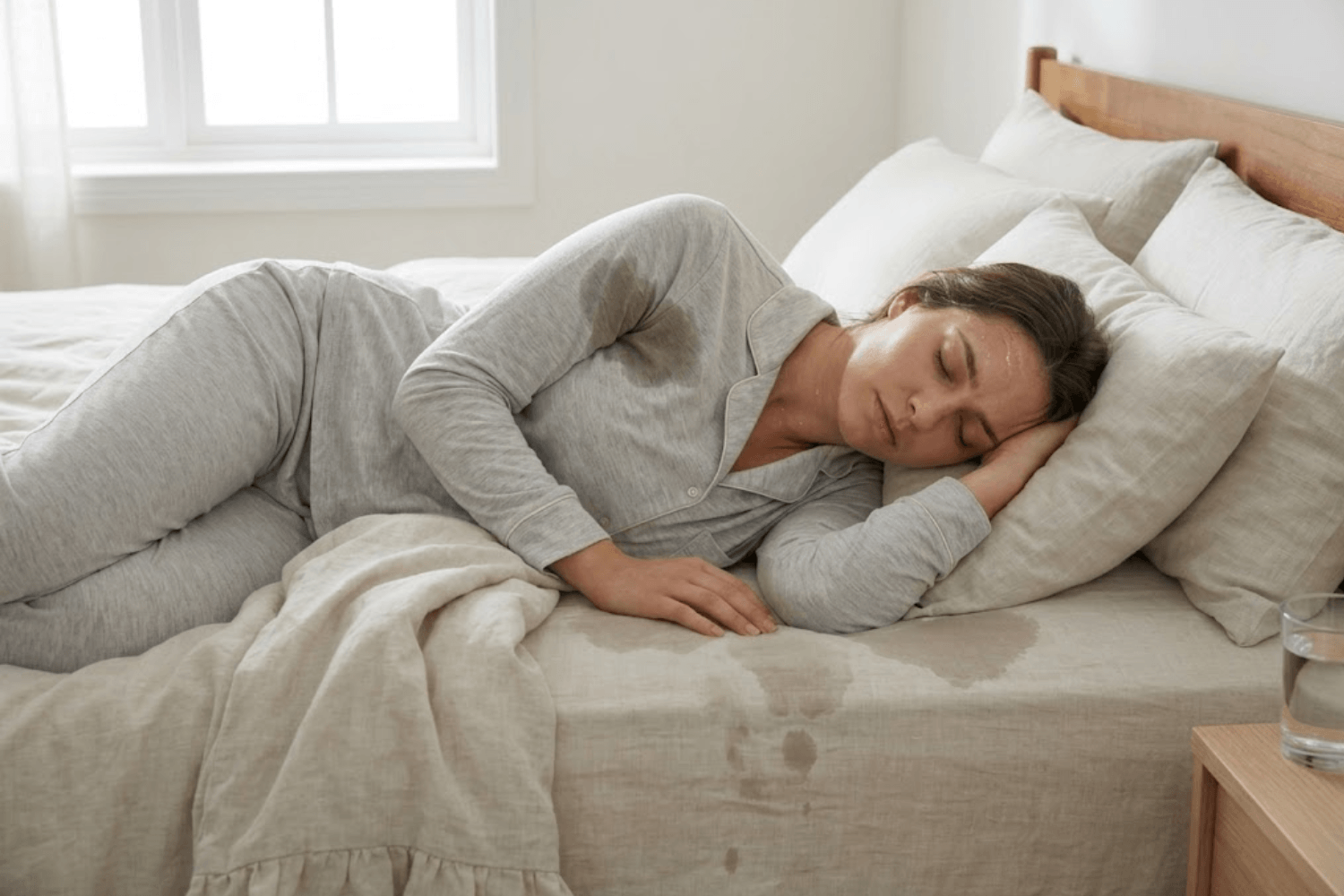
Why Do You Sweat So Much After Having a Baby?
During pregnancy, your body retains a significant amount of extra fluid. Your blood volume increases by around 45% to 50% during pregnancy, and your body retains an additional 6 to 8 litres of fluid, and your body holds onto additional water in your tissues. After you give birth, your body needs to get rid of all that excess fluid, and it does so through two main routes: urination and sweating.
At the same time, your hormone levels undergo a dramatic shift. During pregnancy, your levels of oestrogen and progesterone are extremely high. After delivery, they plummet. This sudden hormonal drop is similar to what happens during menopause (although much more abrupt), and it has the same effect on your body's thermostat. Your hypothalamus becomes more sensitive to minor temperature changes and responds by triggering hot flushes and sweating.
The combination of fluid shedding and hormonal recalibration is what makes postpartum sweating so intense. It is your body doing exactly what it needs to do, even though it feels deeply unpleasant at three in the morning.
Night Sweats During Pregnancy
Night sweats do not only happen after pregnancy. Many women experience them during pregnancy too, particularly in the first and third trimesters.
In early pregnancy, the surge in progesterone and the increase in metabolic rate can raise your core body temperature, leading to sweating at night. Your body is working significantly harder than usual, even when you are sleeping, and this generates extra heat.
In the third trimester, the increased blood volume, the extra weight you are carrying, and the continuing hormonal changes all contribute to a higher baseline body temperature. Many women find that they feel permanently warm during the last few months of pregnancy, and this frequently translates into night sweats.
Pregnancy night sweats are generally harmless, but if they are accompanied by a fever, chills, or flu like symptoms, you should contact your midwife or GP, as these could indicate an infection.
Night Sweats and Breastfeeding
If you are breastfeeding, your night sweats may persist for longer than they would otherwise. Around 29% of breastfeeding women report ongoing night sweats beyond the initial postpartum period. This is because breastfeeding keeps your oestrogen levels suppressed. Low oestrogen is the same hormonal state that causes menopausal night sweats, and it has the same effect on your body's temperature regulation.
Breastfeeding also triggers the release of prolactin, the hormone responsible for milk production, and prolactin can influence your body's thermostat too. On top of that, the physical act of breastfeeding generates heat, especially if you are feeding during the night with your baby pressed against your chest.
This does not mean you should stop breastfeeding to avoid night sweats. The sweating is a manageable inconvenience, and it will resolve once you stop breastfeeding or as your hormone levels gradually adjust. In the meantime, focus on making yourself as comfortable as possible.
How Long Do Postpartum Night Sweats Last?
For most women, the worst of the postpartum sweating lasts for about two to six weeks after delivery. This is the period when your body is shedding the most fluid and your hormones are making their biggest adjustment.
After those initial weeks, the sweating usually becomes less intense and less frequent. However, it can take several months for your hormones to fully stabilise, and some women continue to experience occasional night sweats for longer, especially if they are breastfeeding.
If your night sweats persist beyond a few months, are getting worse rather than better, or are accompanied by other symptoms like a fever, rapid heart rate, or excessive fatigue, it is worth mentioning to your GP or health visitor. Occasionally, postpartum thyroid problems can cause persistent sweating, and a simple blood test can check for this.
How to Manage Night Sweats as a New Mum
When you are already exhausted from night feeds and the general demands of a new baby, the last thing you need is to add "strip and change the sheets" to your to do list at 3am. Here are some practical strategies that can help.
Layer your bedding. Instead of one thick duvet, use a lighter duvet with a throw or blanket on top that you can push off easily when you start to feel hot. This gives you flexibility to adjust your temperature throughout the night without getting up.
Keep a towel on your pillow. Placing a thin towel over your pillow gives you something you can quickly swap out if your pillow gets soaked, without having to change the whole pillowcase at 2am.
Keep water by your bed. You are losing fluid through sweating and possibly through breastfeeding too. Staying hydrated helps your body regulate temperature more effectively and replaces the fluid you are losing.
Dress lightly. Loose, breathable nightwear in natural fabrics is much more comfortable than anything synthetic. Bamboo and cotton are both good choices. Some women find sleeping in just underwear and a light top is the most comfortable option.
Keep the room cool. Aim for 16 to 18 degrees Celsius. This is also the recommended temperature range for a baby's room, so it works for both of you.
Choose breathable bedding. If your sheets are polyester or a synthetic blend, they will trap the moisture from your sweat against your skin and make the discomfort much worse. Natural fibre sheets in bamboo or eucalyptus wick moisture away and allow it to evaporate, so you feel drier even when you are sweating.
Keeping Bedding Fresh When You Are Sweating Every Night
As a new mum, you have approximately zero spare time. The idea of washing your sheets more than once a week probably sounds laughable. But when you are sweating into your bedding every night, the bacterial buildup happens fast, and stale, smelly sheets are the last thing you need when you are already feeling uncomfortable.
The most practical solution is a quick daily bedding routine that takes about 30 seconds. When you get up in the morning (or whenever you finally make it out of bed), pull the duvet back to let everything air out. If you can open a window, even better. Then give your sheets and pillows a quick spray with a bedding hygiene spray to tackle the bacteria that have built up overnight.
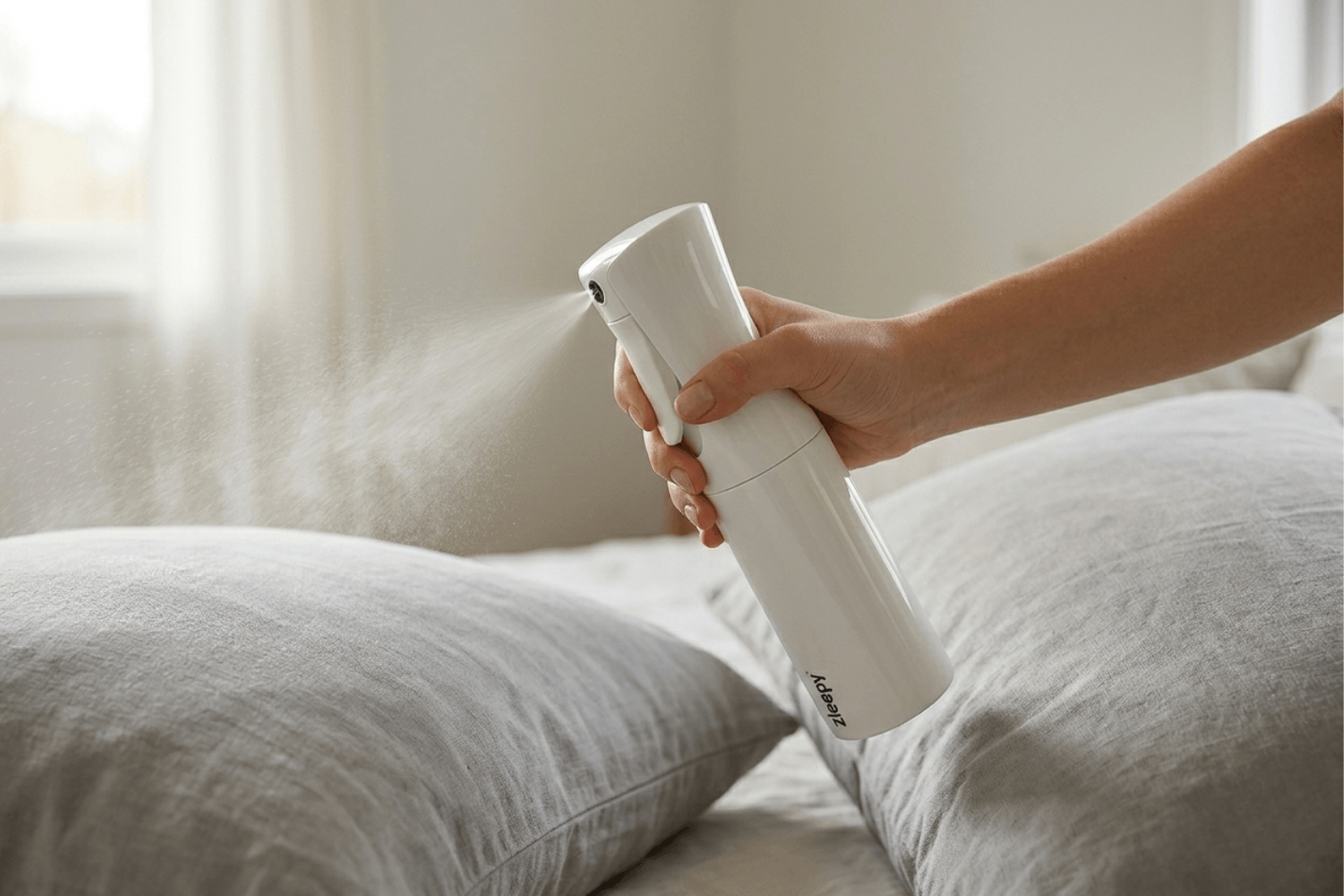
This is not a substitute for washing your sheets, but it keeps things fresh and hygienic between washes, which is especially important when you are sweating heavily and do not have the time or energy to change the bed every few days.
For more on the ideal washing schedule and how to maintain bedding between washes, see our guide on how often you should wash your sheets.
What to Wear to Bed When You Are Sweating Postpartum
What you wear to bed matters more than you might think. The wrong sleepwear can make night sweats significantly worse by trapping heat and moisture against your skin.
Avoid polyester, nylon, and any synthetic fabric. These materials do not breathe and do not wick moisture, so they hold your sweat against your body and make you feel clammy and uncomfortable.
The best options are loose fitting pyjamas or nightwear in bamboo, cotton, or a bamboo cotton blend. Bamboo is particularly good because it is naturally moisture wicking, antibacterial, and softer than cotton. It also regulates temperature well, keeping you cool when you are warm without making you cold when the sweating stops.
If you are breastfeeding during the night, a loose fitting nursing top in a natural fabric is practical and breathable. Avoid anything tight or restrictive, as this will trap heat.
When to Talk to Your Doctor
Postpartum night sweats are normal and usually nothing to worry about. However, you should mention them to your GP or health visitor if they persist beyond a few months with no improvement, if they are getting more intense rather than easing off, if they are accompanied by a fever, rapid heartbeat, tremors, or unexplained weight loss, or if you feel generally unwell alongside the sweating.
These symptoms could indicate a postpartum thyroid condition (postpartum thyroiditis), which affects a small percentage of new mothers and is easily diagnosed with a blood test. It is treatable and usually temporary, but it is important to catch it.
Remember that your GP and health visitor have heard it all before. Night sweats are one of the most common postpartum complaints, and there is absolutely nothing to be embarrassed about. If it is affecting your quality of life, it is worth talking about.